U 2 R Worth It, LLC Review my statement

Card processing · Maine & New Hampshire

Your card fees
should be zero.

You keep one hundred percent of every ticket. Your customers choose how they pay — cash or card — and whoever chooses card covers the cost of the card. No monthly processing bill, no rate creeping up every year, no four-year lease.

Valor PayCloverToast
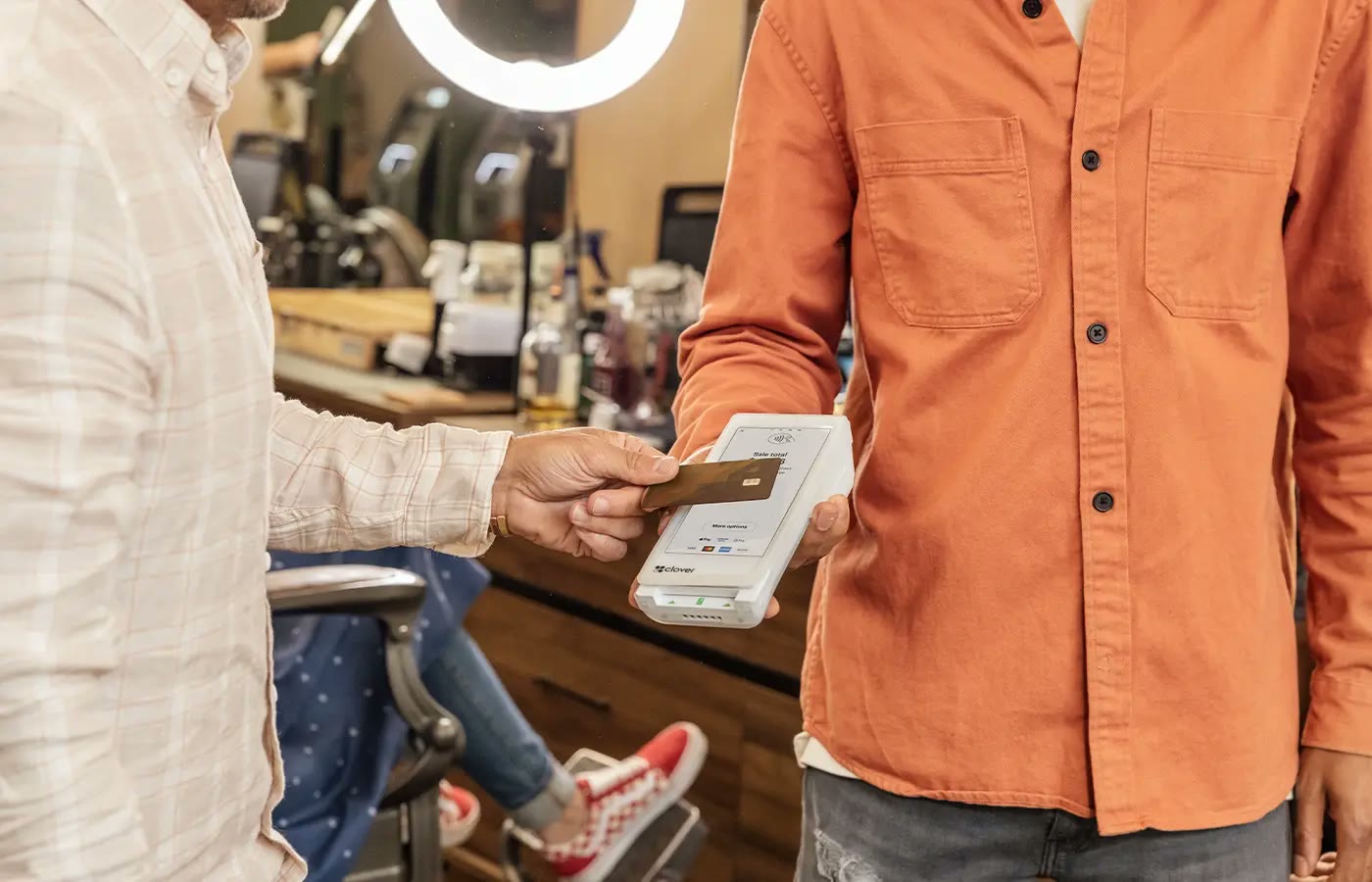
A customer hands a card to a barber holding a Clover Flex handheld terminal at the counter.
Processing fees
You pay$0.00
Customer paysCash price
Card prices carry a small adjustment. Cash customers get it taken off.
Your bank stays
Funds settle to the account you already use.
Your customers choose
Cash pays less. Card pays the posted price.
Signage supplied
Register and receipt disclosures, set up for you.
Local install
Hardware delivered, programmed and tested on site.

The math

What you're paying now, in a year.

Most merchants know their rate. Almost none know what it costs over twelve months. Put your own numbers in — nothing here is an industry average.

Straight answer: the number below is what leaves your business. Under a cash-discount program it stays in the business instead.

$

Example default — change it.

%

Total fees ÷ total volume.

You pay today, monthly $870
You pay today, per year $10,440
Over five years $52,200
Under a zero-cost program you'd pay $0

An estimate from the figures you entered, not a quote. Your statement shows the real number.

How it works

Four steps, about a week.

01

Send one statement

A recent month is enough. I read the fees line by line and tell you what you're actually paying — including the ones buried in the back pages.

02

See the number in writing

Annual cost today against annual cost under the program. If your current deal is better, I'll say so and you keep it.

03

Hardware, set up

Valor Pay, Clover or Toast — whichever fits how you take orders. Delivered, programmed and tested before you're live.

04

Signage and training

Register signs, receipt language and a ten-minute walkthrough for whoever's on the counter.

Equipment

Three platforms. One of them fits your counter.

These are the three I deploy and support. The right one depends on how you take orders — not on which pays me more.

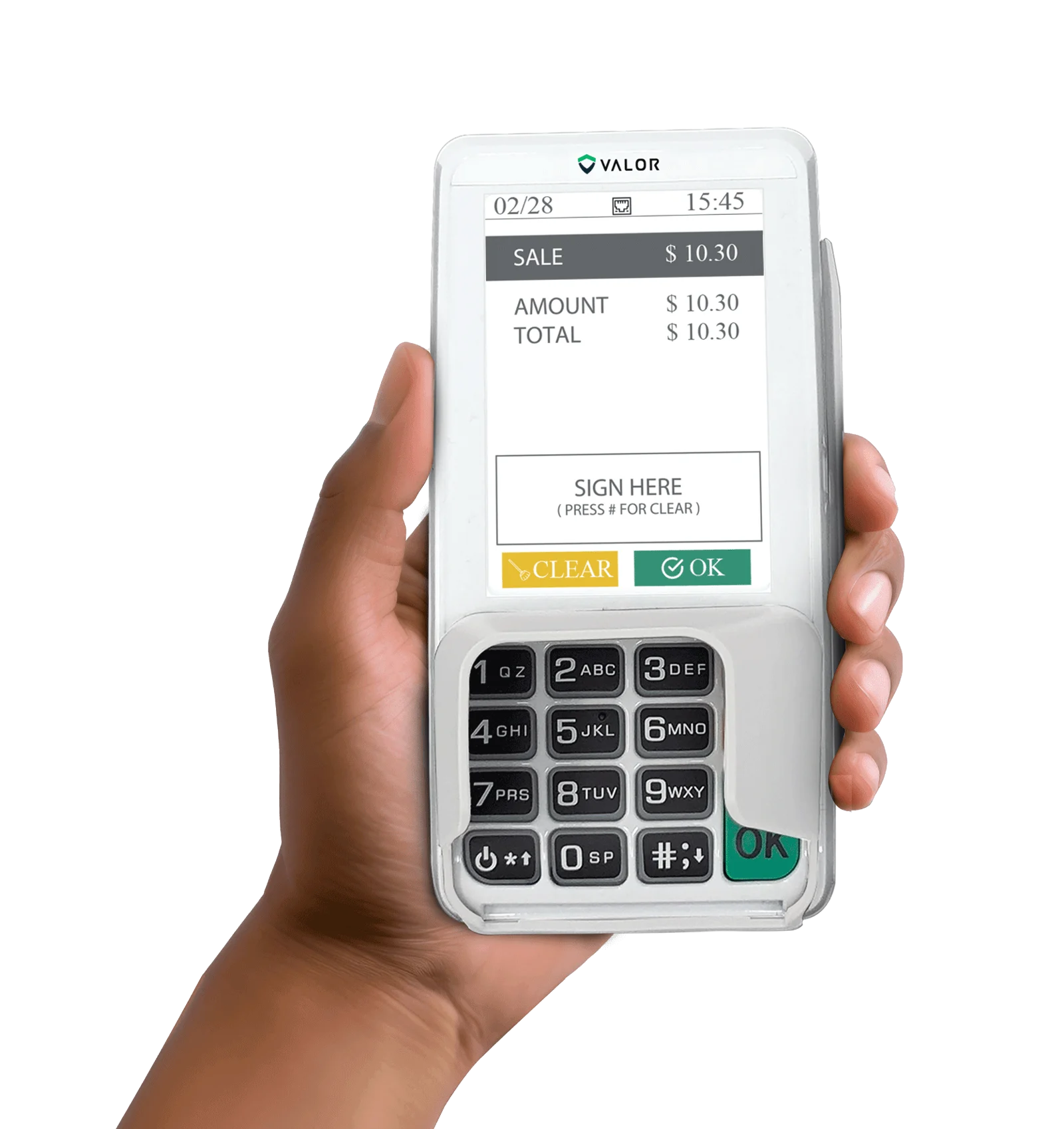
Hand holding a Valor Pay terminal mid-sale, showing the amount and signature prompt.

Valor Pay

Countertop and pin pads

The workhorse for a service counter, salon chair or small retail floor. Fast tap and insert, printed receipts, and a screen that shows the cash price next to the card price.

  • Handheld and countertop terminals
  • Tap, chip, swipe, Apple Pay & Google Pay
  • Cash-discount pricing built into the screen
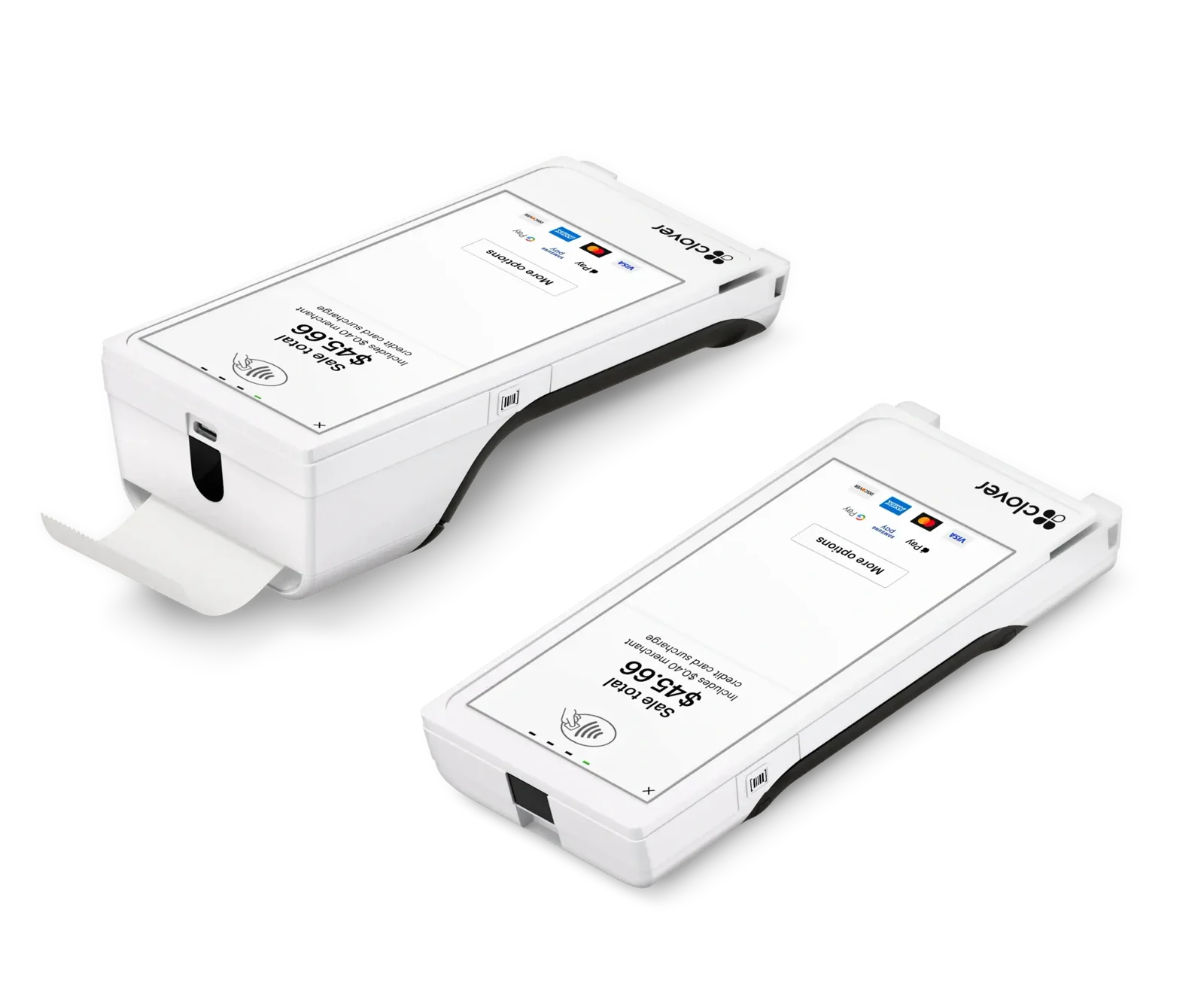
Clover Flex and Flex Pocket handheld POS devices side by side.

Clover

Handheld and full POS

Take the terminal to the table, the chair or the job site. Mini and Station Duo cover a fixed counter with a cash drawer and a customer-facing screen.

  • Flex handheld with built-in printer
  • Mini and Station Duo for a fixed register
  • Inventory, employees and reporting included
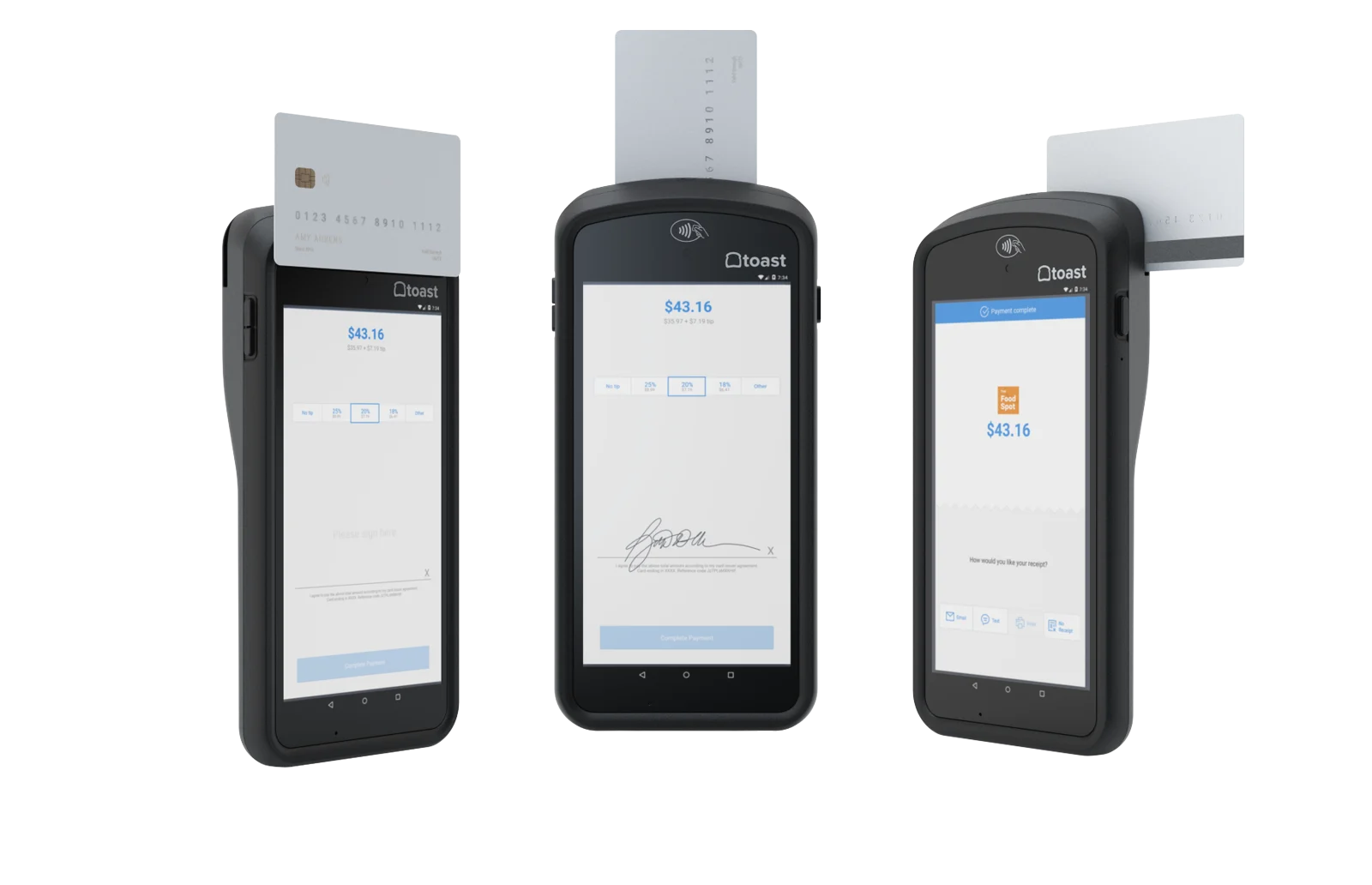
Three Toast Go handheld terminals showing the steps of a card payment, from tip selection to receipt.

Toast

Restaurant systems

Built for table service and high-volume counters: handhelds for servers, terminals at the bar, tickets routed straight to the kitchen.

  • Toast Go handhelds for the floor
  • Fixed terminals and kitchen displays
  • Online ordering and delivery in one place

In use

Where it actually lives.

Barber holding a handheld terminal while a customer taps a card.
Chair-side payment — no walk to the register mid-cut.
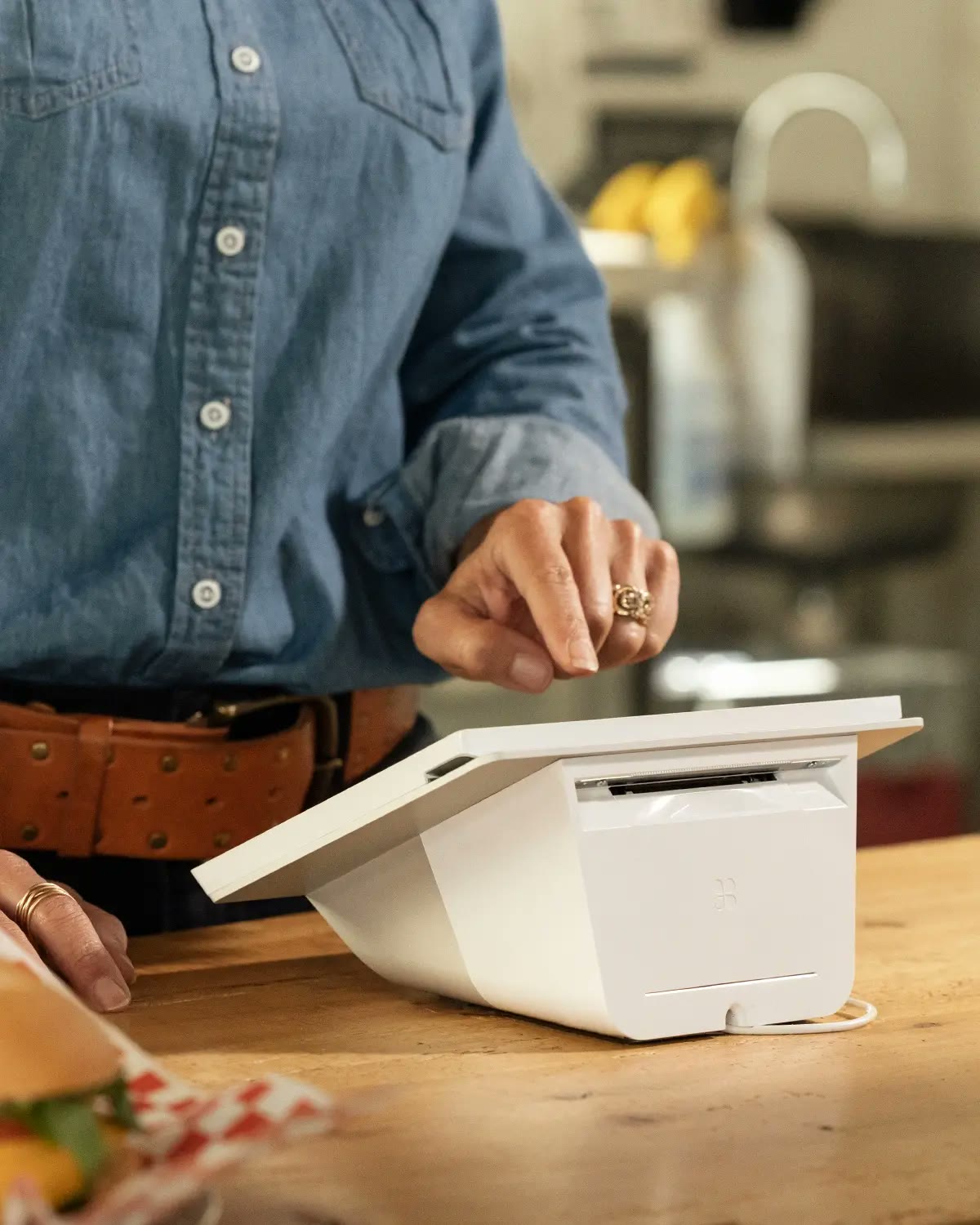
Close-up of a compact countertop terminal printing a receipt beside a sandwich order.
Small footprint where counter space is tight.
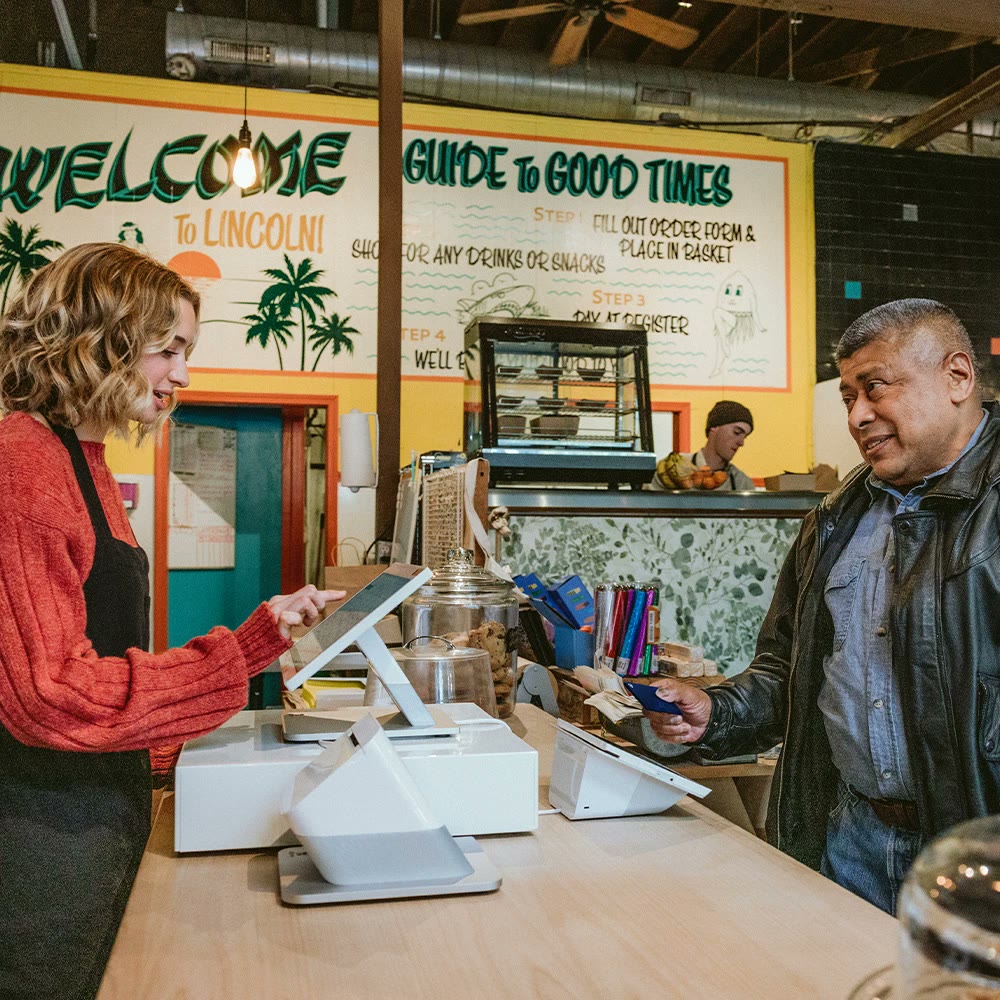
Shop clerk ringing up a smiling customer who is holding a card.
Retail counter, one screen for both sides of it.
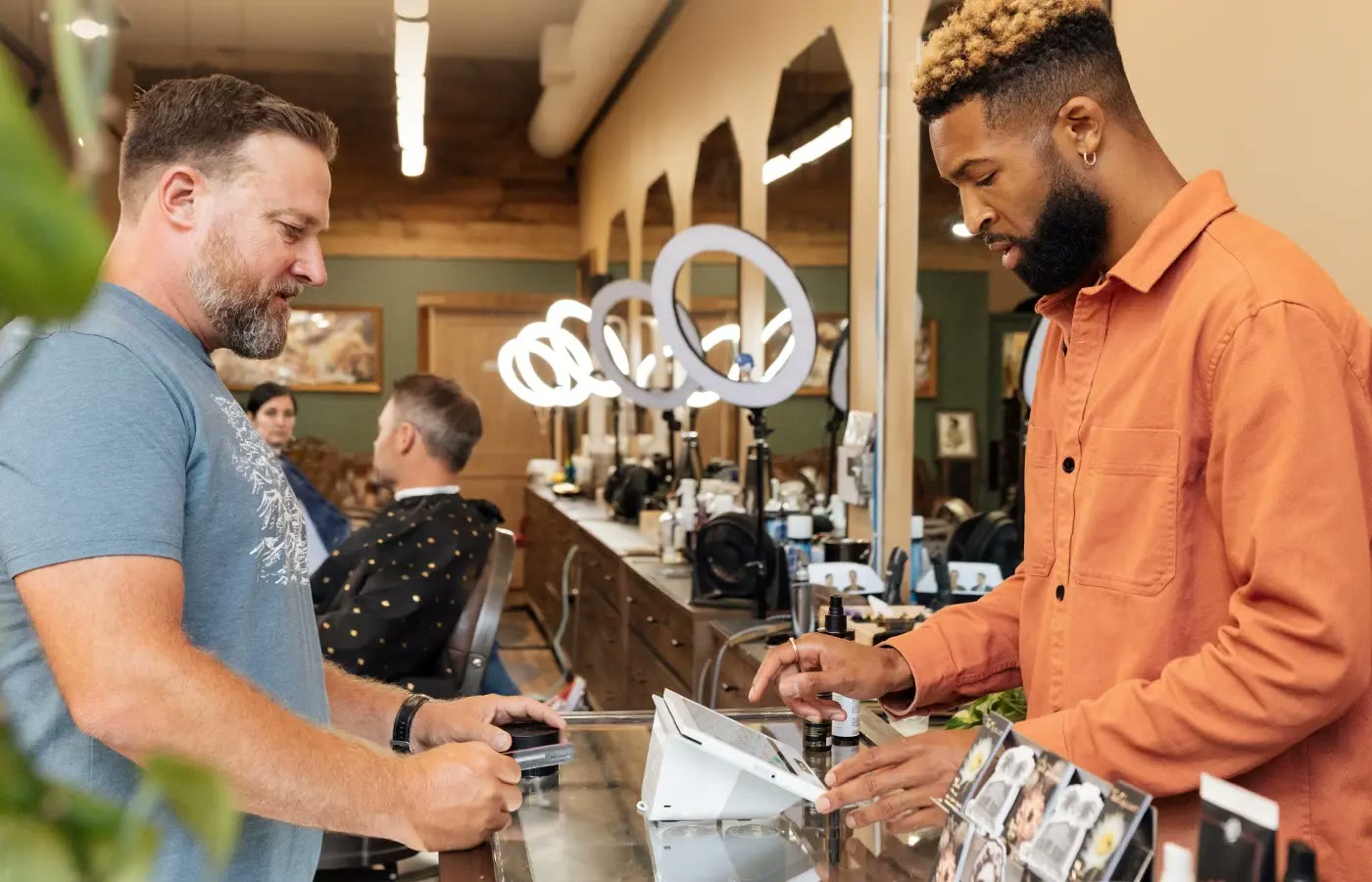
Barbershop owner ringing up a customer at a counter-mounted register.
Front desk, mid-rush — the register keeps up with the chairs.

Fit

Where this model works well

  • Counter service, salon, barber, auto, contractor — tickets where the customer is standing there with a choice.
  • Mixed cash and card traffic.
  • You're tired of a statement you can't read.
  • You're out of contract, or close enough that the exit fee is smaller than a year of fees.

No

Where it doesn't

  • Almost all card, almost no cash — you'd be posting a higher price and keeping the difference, which some customers notice.
  • Large average tickets where a percentage adjustment reads as a big number on the receipt.
  • Deep in a contract with an exit fee that costs more than you'd save.

I'll tell you which group you're in before you sign anything. A merchant who knows I said no is worth more than one who finds out later.

Straight answers

The questions everyone asks.

If something here is unclear, ask me directly — I'd rather explain it now than have you surprised by a statement later.

Is this legal?

Yes, in all fifty states. This is a cash-discount program, not a surcharge. Prices at your register already include the card cost, and customers paying cash get that amount taken off. Surcharging — adding a fee on top of the posted price — is a different thing and is restricted or banned in several states.

Two things make it clean: the discount is disclosed at the point of entry and again on the receipt, and it applies to every card type the same way. I supply the signage and set the receipt language for you.

What does the customer actually see?

A sign at the door and at the register, and a line on the receipt showing what they saved by paying cash. The screen shows both prices before they choose.

That transparency is the whole point. A customer who feels tricked disputes the charge; a customer who was told up front doesn't.

Do I have to change banks or processors?

No. Funds settle into the same business account you use now, on the same schedule. What changes is the fee line, not the deposit.

I'm under contract. What about the exit fee?

Send me the contract page with the term and the early-termination language and I'll price it honestly. Sometimes the fee is smaller than twelve months of fees and the switch is obvious. Sometimes it isn't, and I'll tell you to sit tight until it expires.

What about PCI and the "non-compliance" fee?

That fee is a billing line, not a legal finding — and a lot of merchants pay it monthly for years without knowing why. Your compliance level depends on your annual volume and how you take cards. I'll tell you which self-assessment applies to you and what it actually requires.

Is there a term or a lease on the equipment?

Any term, lease, monthly fee or minimum gets written down and shown to you before you sign. If the hardware carries a term, you'll see the length and the exit formula on the same page as the price — not in a footer.

How fast can I be live?

Usually a week from a signed application: a day or two for underwriting, then a scheduled install, then a test transaction before you take a real one. Restaurant installs get scheduled around service hours.

Outside Maine and New Hampshire, hardware ships programmed and I set it up with you remotely — same program, same pricing, any state.

Next step

Send one statement. I'll send back one number.

Photograph last month's statement and text it over. You'll get the annual cost, line by line, and what it becomes under the program. No meeting to explain a meeting.

Call or text207.274.1780 Emailu2rworthit@gmail.com
On the groundMaine & New Hampshire
Anywhere elseRemote setup, all 50 states